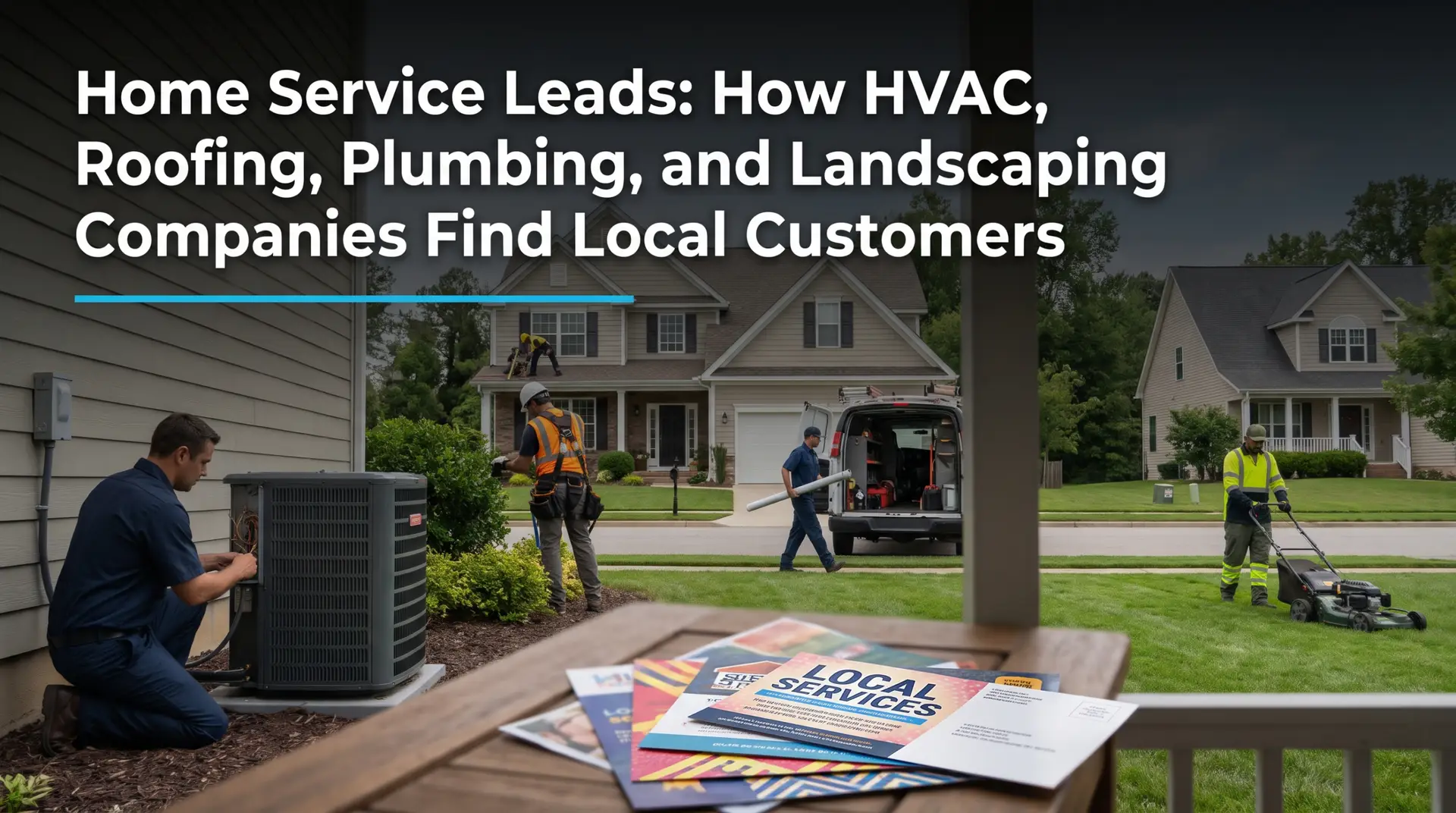
The best home service leads come from households that have just moved in, because a new homeowner has no plumber, no roofer, and no lawn guy yet. Those relationships tend to get decided in the first few months and then stay put for years. Contractors reach them by mailing addresses pulled from recorded property deeds, filtered to their service radius.
Somebody who has lived in a house for eleven years already has a plumber. They may not like him much, but they have his number in their phone, and when the water heater goes, they call him instead of you.
Somebody who moved in three weeks ago has nobody. That is the whole business, and it is why we have been compiling new homeowner data for contractors for more than 50 years.
The First Few Months Decide the Next Ten Years
A house changing hands resets every trade relationship attached to it. The previous owner’s HVAC company, roofer, landscaper, and pest control outfit all lose the account the day the deed records, and none of them necessarily know it yet.
The new owner is going to replace all of them. Not deliberately; they will just need something done, ask a neighbor or search, and whoever shows up and does a decent job often becomes the person they call from then on.
That decision window is short, and it closes quietly. Once somebody has a roofer they trust, getting in front of them gets much harder.
What Each Trade Should Be Watching For
The data is the same; what you filter on is not.
HVAC cares about the age of the housing stock, which in practice means picking the ZIP codes you already know are full of thirty-year-old systems rather than filtering the list for it. A recently sold house of that age may well have a system near the end of its life, and the buyer may already know it.
Roofing works the same way from a different angle. The older neighborhoods, and the purchase price band where the buyer still has budget left after closing.
Plumbing benefits least from filtering and most from speed. Plumbing emergencies do not wait for a marketing calendar, so the job is being the name on the fridge when one happens.
Landscaping and pool companies should watch purchase price, which is the closest filter to property value, and should mail in the spring regardless of when the house sold.
All of that comes off the same new homeowners mailing list. You can filter by county, ZIP code, or a radius around your shop; set floors and ceilings on purchase price and loan amount; and separate single-family homes from multi-dwelling units. Everything else is territory knowledge, which is yours rather than ours.
Why the Mailbox Beats the Search Result for a First Call
Search works brilliantly when somebody already knows they have a problem. They type “furnace repair near me,” and you want to be there.
The limitation is that you are one of several; you are competing on the strength of your reviews against people who have been collecting them for a decade, and you are paying for the click whether they call or not.
Mail works on a different axis. You arrive before the problem, at the one moment when the household genuinely has no incumbent. A fridge magnet from a landscaper that showed up the week someone moved in sits there for years.
It helps that there is real money moving through this. Harvard’s Joint Center for Housing Studies reports that homeowners spent $517 billion on improvements and repairs in the 12 months ending in the second quarter of 2026, up from $507 billion a year earlier, though it expects growth to slow to about half a percent by mid-2027. A slower market is a reason to be sharper about who you mail, and new owners are a natural place to start.
Sizing a Territory You Can Actually Service
This is where contractors go wrong more than anywhere else.
A two-truck operation does not need every new homeowner in the county. It needs the ones inside a radius its trucks can reach without eating the margin in windshield time. If you win work forty minutes away, you have taken on a job that pays less than it looks like it does.
Pick the ZIP codes you want to own. Mail them consistently rather than mailing a wider area occasionally. Tell us the radius, and we will get back to you by the next business day with a count of how many names a week it produces, which is usually the number that decides whether the plan is realistic.
If the count comes back too small to be worth mailing, we will tell you that too, and suggest widening. If it comes back at four hundred a week and you can service forty jobs a month, that is a conversation about which ZIP codes to drop.
What It Costs to Reach a Street
Names run 9 to 25 cents each depending on your monthly volume, billed as a subscription and delivered weekly. For a contractor working a tight radius, the weekly list is a manageable size, and print and postage will usually cost as much as the data or more.
Files come in whatever you can use: CSV, Excel, printed labels, or labels you run off yourself. If you would rather not handle any of it, our print-and-mail service handles addressing, folding, inserting, sealing, and mailing. Timing depends on volume, so ask for a timeline with your quote. Whatever you send, at least 93% of the addresses we supply will be deliverable. We will send a free sample for your area so you can look at the names before you commit to anything. Call 888-888-5557 and tell us your radius.
FAQs
What are the best leads for a home service business?
Households that have just moved in, because they have no existing relationship with anyone in your trade. Every other lead source puts you in competition with a contractor the customer already uses. This one does not.
Is direct mail worth it for a small contractor, or is it only for big companies?
It suits small contractors well. A national company has to buy broad coverage. You can pick a few ZIP codes you already know and mail them properly, and you control the territory.
How do I know the addresses are current?
Ours come out of county recorders’ offices, built from deeds as they are recorded and delivered weekly as standard. In most metro areas, that puts us about three weeks ahead of competing list companies. We guarantee at least 93% deliverability, and if you want to check before paying for anything, ask for a free sample.
Should I mail new movers or new homeowners?
Depends on your trade. New homeowners have bought the property, which means they have a stake in it and tend to spend on it. New movers include renters, which suits businesses selling services rather than improvements. For HVAC, roofing, and most remodeling work, homeowners are the better list.